
Frustration grows as Iran’s wartime internet shutdown breaks grim record
 05 April 2026
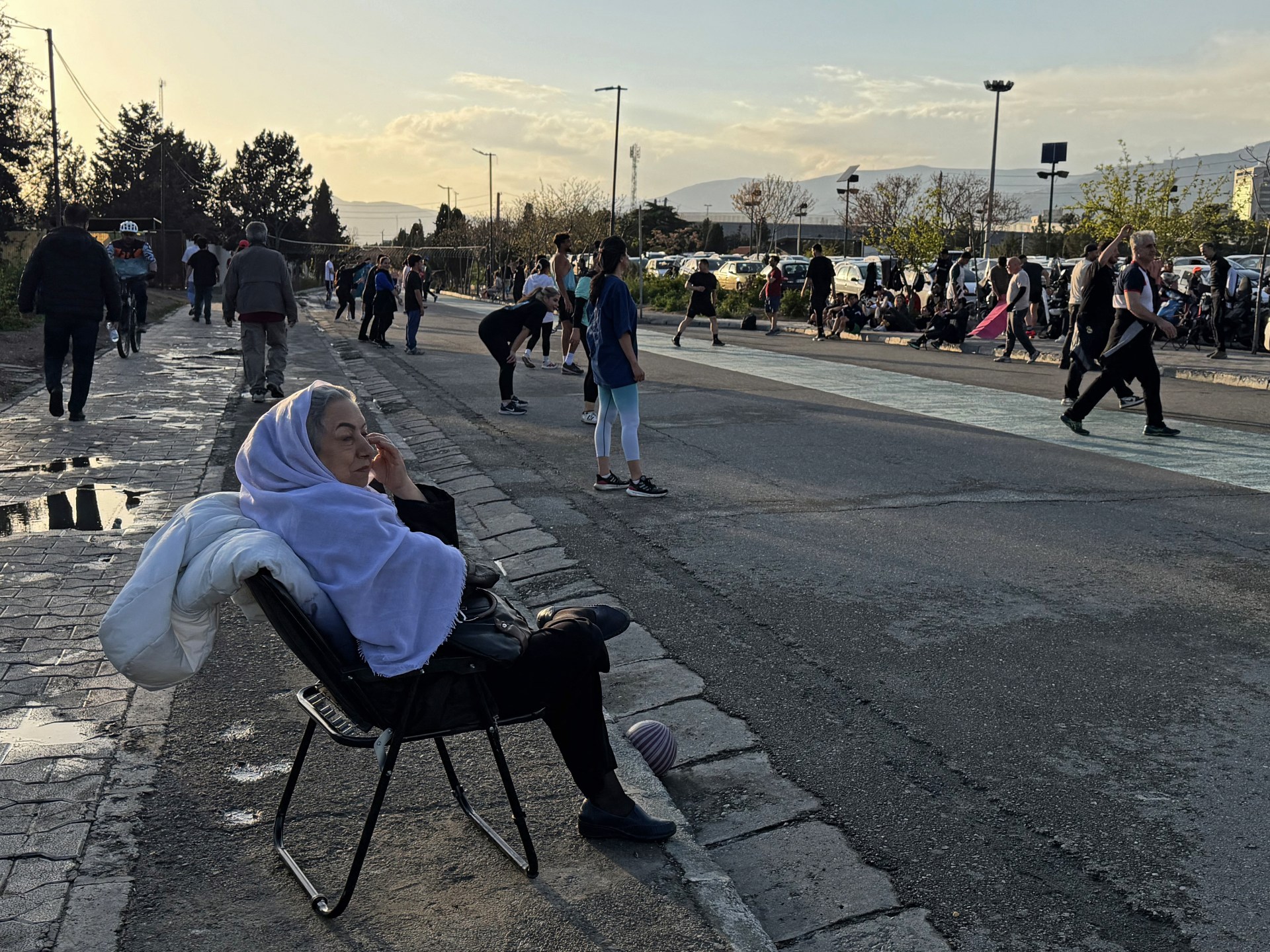

Tehran, Iran – Iran’s state-imposed near-total internet shutdown is now the longest nationwide blackout on record in any country, according to a global monitor.
Connectivity to the global internet has been at around one percent of pre-war levels since shortly after the United States and Israel launched their war on Iran on February 28, according to NetBlocks.
- list 1 of 3“We blame Trump”: Drivers line up for free gas as prices surge in the US
- list 2 of 3Oman, Iran discuss smooth transit in Strait of Hormuz, Muscat says
- list 3 of 3Iran’s ex-FM Zarif proposes peace roadmap; Gulf points at erosion of trust
end of list
Another 20-day internet shutdown was imposed in January, when thousands were killed during nationwide protests, meaning that most Iranian civilians have now spent close to two-thirds of 2026 in digital darkness – with only a limited and at times slow intranet serving to offer some basic services and allow access to state-run news and messaging services.
“Iran is the first country to have had internet connectivity and then subsequently lost it by reverting to a national network,” NetBlocks said on Sunday.
It added that while Myanmar, Sudan, Kashmir and Tigray have had incidents of longer intermittent blackouts, none has experienced a state-imposed shutdown at this scale for this long.
No wars, including those in Ukraine and Gaza, have been known to “have sent an entire country offline” like Iran, the monitor said.
During the January shutdown, the government said that many online businesses could not survive more than three weeks of being disconnected, and that the beleaguered economy was haemorrhaging tens of millions of dollars in direct damages each day, not to mention the untold indirect and cumulative effects of a nationwide blackout.
More than five weeks into the war, the government has not explained how it expects the remnants of the country’s battered digital sector and its globally isolated economy to get through the coming months and years, even if a highly unlikely diplomatic breakthrough stops the war soon.
Advertisement
“There was a wave of layoffs in January, which I survived, but I didn’t survive this latest wave,” said Kamran, a product designer at a technology firm in Karaj near Tehran, who was told he was let go on Saturday, the first day of the working week after the Nowruz holidays.
He told Al Jazeera that he has found a local group where people say what skills they have and others help match them with any job opportunities, but said he was extremely concerned about the prospects of finding gainful employment in the foreseeable future due to the large number of other people looking.
A senior data analyst at a Tehran-based firm who asked to remain anonymous said that his company agreed to offer lower pay raises than expected for the new Persian year, so it would not be forced to downsize any employees for now.
“But the bosses are only doing three-month contracts, so there’s a prevailing sense that many people will have to go after that time is up,” he told Al Jazeera.
The devastating bombing of Iran’s top steel factories, petrochemical firms and other civilian infrastructure is also expected to exacerbate economic conditions that were already defined by rampant inflation and high unemployment long before the war.

The minority of Iranians from inside the country who are connected to the internet are either directly permitted – or whitelisted – by the state, or have paid exorbitant amounts to purchase proxy connections that at times last for hours before being taken down by the authorities.
As government spokeswoman Fatemeh Mohajerani put it last month, the government is only allowing those who can “get the voice out” to have internet. That has included top officials, state-affiliated figures and entities, and news agencies.
Some of the whitelisted, and even some of the disconnected state supporters, write on X or the comment sections of local news sites working with the intranet that they are happy to accommodate the situation, which they deem to be a necessity for times of war.
Left in the dark with a highly uncertain future, many do not share the same sentiment.
Another Tehran resident told Al Jazeera that she and several friends had a get-together at home last night to share updates gleaned from brief periods of connectivity, state television, foreign-based satellite television networks, and endless phone calls and text messages while state supporters congregate in mosques and city squares.
Advertisement
“Some of us were laid off; all of us were worried about whether we will have electricity later this week, let alone what could happen in another month,” she said. “Artemis II has a live feed from the moon, but we can’t access Google search or AI, and have to think about what to do when the water pumps stop working when the power goes out.”
After the United States bombed a newly built bridge west of Tehran, US President Donald Trump vowed to attack power plants and more bridges on Tuesday, in order to convince Iran’s Islamic Revolutionary Guard Corps (IRGC) to stop blocking the Strait of Hormuz – something it has firmly rejected.

Iranian authorities have taken steps towards implementing a tiered internet system, indicating that they intend to keep in place severe restrictions even after the war.
A “guide to connect to international internet for businesses” has been circulated among some business communities, urging those interested to establish contact with an official account on a state-run messaging app called Bale to send documents and apply.
A number of journalists reported receiving text messages from an unknown sender titled “Internet Pro”, which contained a registry link with a top telecommunications provider for people who wish to have connectivity in the future.
At the same time, another prominent state-linked telecoms carrier has also released steps required to register for its own version of “Internet Pro”, which would be sold in the form of one-year data packages costing more than normal carrier packages.
Internet service providers have also not refunded customers or lowered their price plans even though they are not providing access to the global internet. Some users have reported during the war that their mobile data packages have been depleting even quicker than when the global internet was connected.
The administration of President Masoud Pezeshkian, which had made unblocking Iran’s internet landscape a central campaign promise less than two years ago, has not offered an official explanation for the shutdown.
Related News
GCC chief urges UN to halt Iranian attacks, protect Gulf waterways
Trump’s changing messages on Iran war: What does it say about US strategy?
Trump seeks historic $1.5 trillion for military in Congress budget request